Back to News & Events
News & Events • Katherine L. Magsanoc, Philippine Star • August 28, 2026
Building beyond the legacy
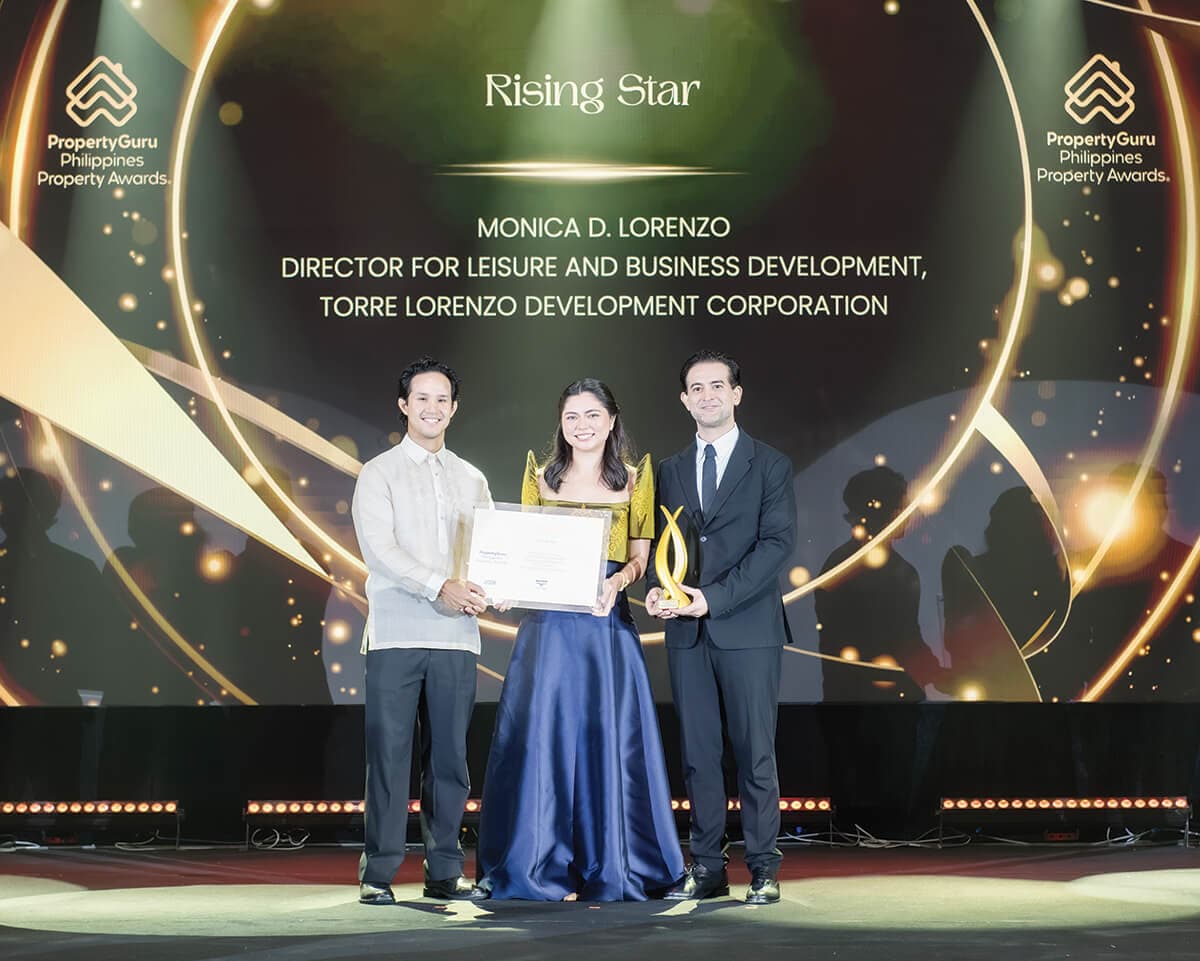
Monica Lorenzo on carrying Torre Lorenzo forward through thoughtful growth, adaptability, and a long-term view.
For Monica Lorenzo, being part of a family business means carrying a name that is impossible to separate from the business itself.
The name Torre Lorenzo appears on the buildings, on her company ID, and in her email address. It is also the family name.
“This is something that carries a lot of weight,” says Lorenzo, director of leisure and business development at Torre Lorenzo Development Corporation (TLDC).
“Because you’re not just talking about the business anymore. You’re talking about your family.”
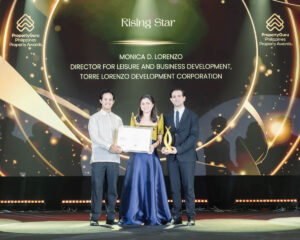
This sense of responsibility has become central to how Lorenzo approaches her role as part of the company’s second generation; a role that recently earned her the Rising Star Award at the PropertyGuru Philippines Property Awards 2026.
But for Lorenzo, the task of the next generation is not simply to protect what the previous generation built: it is to understand it well enough to know how it can grow.
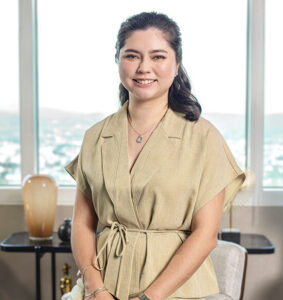
“It’s not trying to cover what’s already been done, not trying to redo, not trying to discredit all the work that has been put in,” she says.
“It’s asking, ‘How do we grow on that? How do we scale that? How do we expand?’”
Preserving what matters
Lorenzo describes TLDC as a company that has always been discerning about the projects it takes on: where it builds, what it invests in, and what developments it chooses to pursue.

This selectiveness, she believes, is part of the company’s identity and something worth preserving even as the business expands.
What must evolve, however, is everything shaped by a rapidly changing world: technology, processes, consumer expectations, and what investors are looking for.
Real estate makes this particularly demanding.
A major development can take years to plan and construct, which means decisions being made today have to anticipate a very different market when a project is eventually completed.

“We can’t tie ourselves to legacy thinking because if we tie ourselves to legacy thinking, by the time the building is finished, we’re 20 or 30 years too late,” Lorenzo says.
Her approach is, therefore, deliberately long-term.
When planning a project, she says, the company has to think five to 10 years ahead — when the building will be turned over — and even further into the future, considering the generations who will eventually live in or use it.

For a family enterprise, this horizon extends beyond annual returns.
“You’re thinking of it for your children, your grandchildren, and so on,” she says.
For Lorenzo, one immediate objective is simple: help the business make it to the third generation.

Learning to adapt
The environment in which Lorenzo’s generation has entered leadership has reinforced this long-term mindset while also demanding something more immediate: adaptability.
The past several years have brought a succession of disruptions, from the pandemic and wars to supply-chain challenges.
For younger executives, responding to upheaval has become less an occasional leadership test and more a regular part of doing business.
“We have to be very fast and we have to be willing to change, to adapt quickly to what’s happening around us,” Lorenzo says.
This adaptability also extends to the workplace.
Lorenzo sees the organization becoming increasingly multigenerational, with different generations bringing different expectations about how they work.
As the company grows, she believes leaders have to build teams and workplaces that can accommodate those differences.
At the same time, she is thinking about an even younger generation.
TLDC’s university residences already serve Gen Alpha residents, while projects being planned today may not be completed until 2033 or 2034.
This means developers have to anticipate not only what today’s consumers want, but what tomorrow’s consumers may expect.
“It is a lot of trend spotting or consumer forecasting when it comes to real estate,” she says.
The solution is not necessarily to predict every trend correctly, but to build flexibility into the business.
Lorenzo cites provisions for electric vehicles as one example.
Even when current requirements may call for fewer charging facilities, projects can be designed with the necessary provisions so that they can be upgraded as demand changes.
The same principle can apply to amenities and physical spaces. What is popular today may not be relevant a decade from now.
The goal, therefore, is to create developments that can adapt.
People behind the business
For all the emphasis on innovation and future-proofing, Lorenzo believes the most important element remains people.
“At the end of the day, I think it all boils down to people,” she says. “Because if you have a good team behind you, you are able to put out the best possible products.”
Her approach was shaped in part by her four years at Unilever, where she worked in marketing and brand management in the Philippines and the Netherlands.
Working across multiple brands and diverse teams taught her to understand consumers, navigate complexity, and distinguish what is important from what is merely urgent.
She also saw different leadership styles up close; experiences that helped her identify the kind of leader she wanted to become.
This experience has informed her approach at TLDC, where she believes people should be able to speak up, including when their views challenge established thinking.
“I value that kind of honesty and transparency,” she says.
For Lorenzo, voicing a different perspective is part of contributing to the organization. Whether the idea is ultimately adopted is a separate matter.
What matters first is that people are willing to put their ideas on the table.
Growing with legacy
This willingness to challenge does not mean rejecting what came before.
Lorenzo believes next-generation leaders have to earn their understanding of the business. In a family enterprise, she says, younger members should not automatically enter at the top.
They need to spend time in the trenches, understand how the business works, and experience the day-to-day realities of the people who make the organization run.
“You only really get that by being in the trenches,” she says.
For her, succession is therefore not a dramatic handover from one generation to another.
The transitions that work best are seamless ones: where the next generation builds relationships, earns the trust of the team, and gradually grows into its role.
It is a philosophy that mirrors her broader view of legacy.
A family business does not remain relevant simply by preserving everything exactly as it was.
It survives by knowing what is worth carrying forward, and having the courage to change what no longer serves the future.
For Lorenzo, that future is already being built today.
Continue Reading